

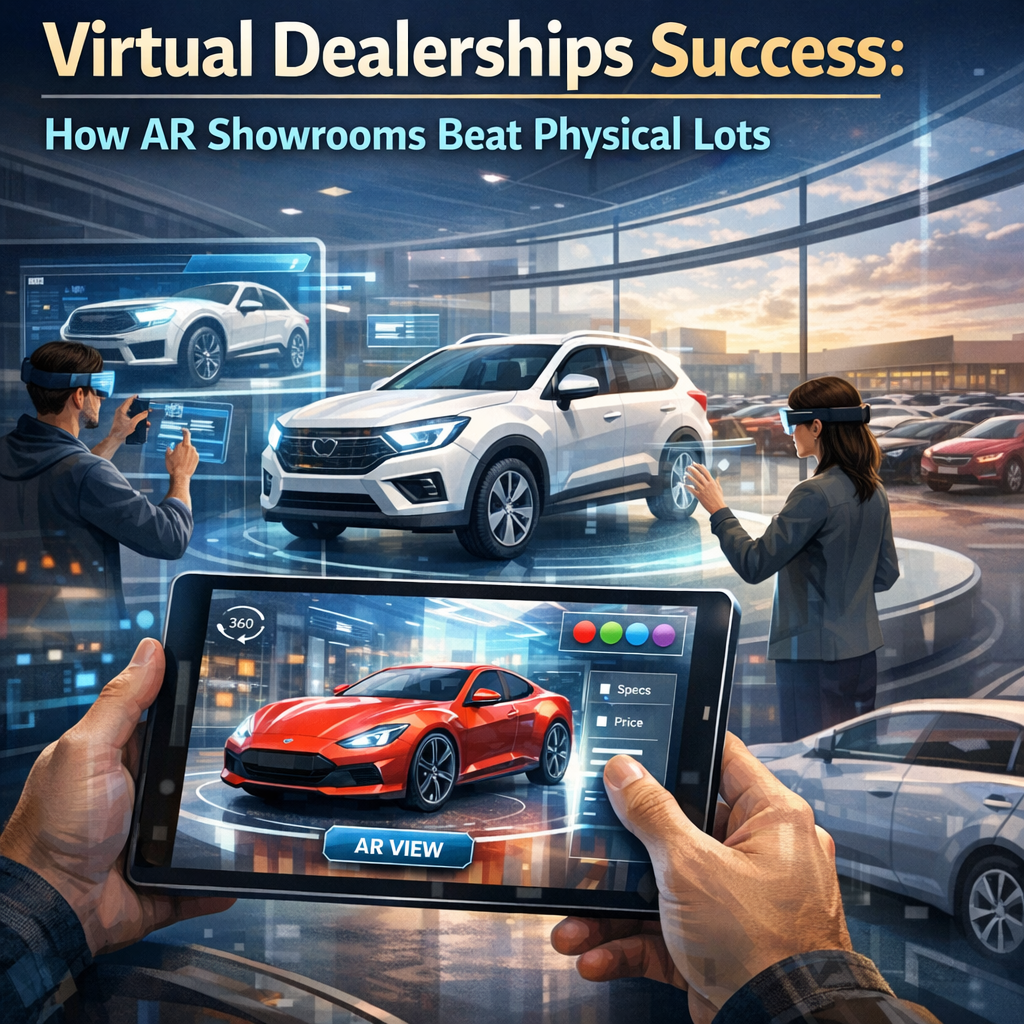
Virtual Dealerships Success: How AR Showrooms Beat Physical Lots
The Rise of Virtual Dealerships: Why AR Showrooms Outperform Physical Lots
The automotive industry is experiencing a radical transformation, primarily driven by advancements in technology. Augmented reality (AR) is at the forefront of this revolution, reshaping how customers interact with car dealerships. Virtual dealerships and AR showrooms are starting to outperform traditional physical lots in terms of customer engagement, sales efficiency, and overall consumer satisfaction. Here’s why.
Enhanced Customer Experience
Interactive Features
One of the most significant advantages of AR showrooms is the ability to provide interactive features that a physical lot cannot match. Customers can customize the car’s color, wheels, and interior features with just a few clicks, and see their changes reflected in real-time. This level of interaction not only makes the shopping experience more engaging but also helps customers make more informed decisions about their purchases.

Convenience and Accessibility
AR showrooms bring the dealership to the customer. No longer does one need to spend hours traveling to various lots to compare models. From the comfort of one’s home, a potential buyer can explore different vehicles through a tablet or smartphone. This convenience is particularly appealing to a demographic that values time and prefers digital interactions over traditional methods.
Increased Sales Efficiency
Faster Sales Process
Virtual dealerships streamline the sales process dramatically. With AR, customers have all the necessary information at their fingertips, reducing the time spent on each sale. Sales representatives can focus on providing value and closing deals instead of handling routine inquiries and walkthroughs, which are easily managed by the AR interface.
Cost Reduction
Maintaining a physical dealership is costly, considering real estate, inventory, and staff expenses. AR showrooms significantly cut these costs, as they require less physical space and can be operated with fewer personnel. These savings can then be passed on to the customer, creating a competitive pricing structure that physical lots find difficult to match.
Improved Customer Insights
Data Collection and Analytics
Virtual dealerships are equipped with sophisticated data collection tools that track user interactions and preferences. This data is invaluable for understanding consumer behavior and refining marketing strategies. Dealerships can use this information to tailor their offerings and communications more effectively, enhancing customer satisfaction and loyalty.
Personalized Marketing
AR enables dealerships to deliver personalized marketing messages based on the data collected from user interactions. For instance, if a customer spends a lot of time looking at high-performance cars, the dealership can highlight similar models or special promotions on performance enhancements. This level of personalization is difficult to achieve on a physical lot.
Challenges and Considerations
While virtual dealerships offer numerous advantages, there are still challenges to consider. Some customers may miss the tactile experience of physically inspecting a car, and the social interaction of face-to-face negotiations. Dealerships must find ways to integrate virtual and physical experiences to cater to all customer preferences.
Conclusion
The rise of virtual dealerships is a clear indication of where the future of car buying is headed. Augmented reality showrooms offer an enhanced buying experience, greater sales efficiency, and deeper customer insights, all while reducing operational costs. As this technology evolves, we can expect AR to become an even more integral part of the automotive sales process, completely reshaping what it means to buy a car. For consumers and dealers alike, the shift to virtual could not be more timely or beneficial.