
Exploring Augmented Reality’s Impact on Car Shopping in the Bay Area
How Augmented Reality Is Transforming Car Shopping in the Bay Area and Beyond
The evolution of technology continuously shapes consumer behaviors and experiences, particularly in high-investment sectors like the automotive industry. In recent years, augmented reality (AR) has emerged as a revolutionary tool, drastically transforming car shopping, especially in tech hubs like the Bay Area. This integration of AR into car buying is not just changing how consumers shop but is also setting a new standard for consumer expectations nationwide.
The Rise of Augmented Reality in Car Shopping
Augmented reality overlays digital information onto the real world, enhancing the way we perceive our surroundings. In the realm of car shopping, this technology offers a unique array of benefits, making it an irresistible tool for both consumers and dealerships.

Virtual Showrooms and Interactive Displays
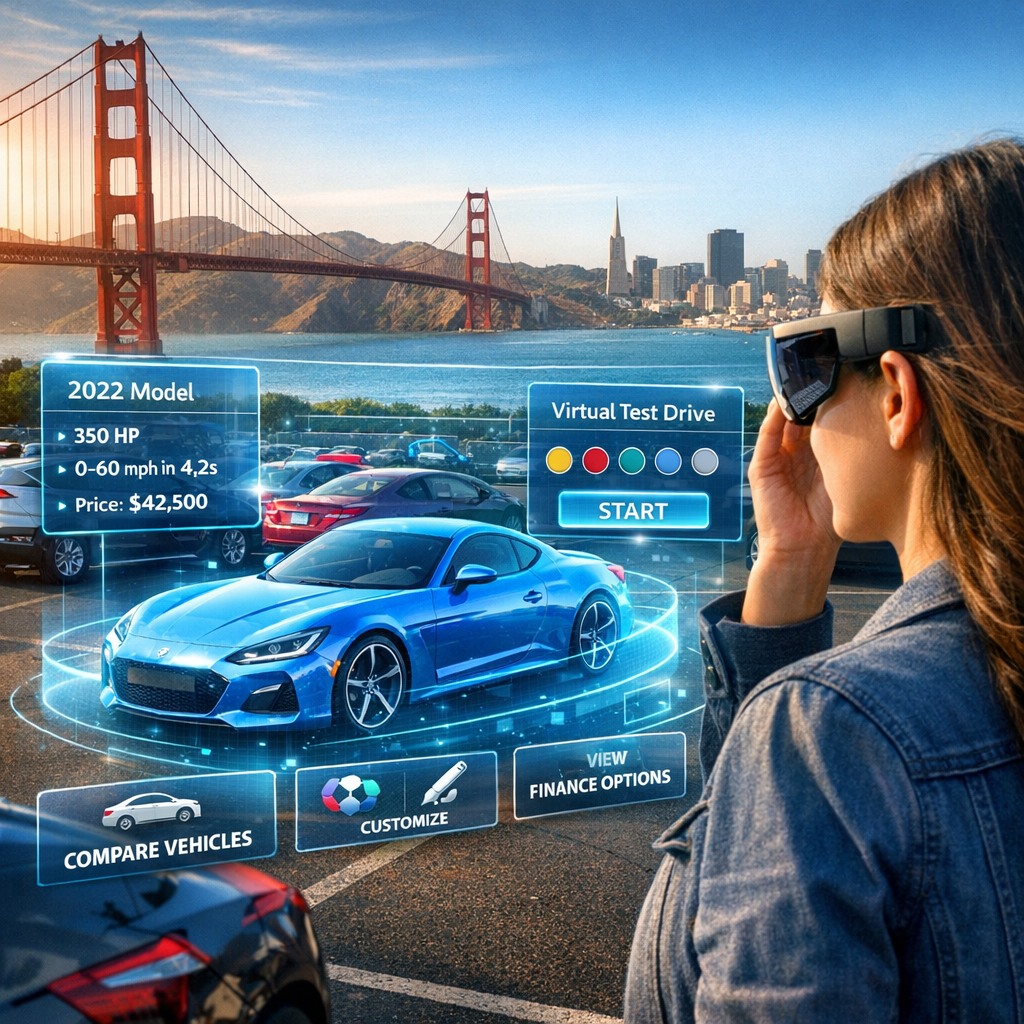
One of the most significant advancements AR brings to car shopping is the creation of virtual showrooms. Customers in the Bay Area, where space and time are often at a premium, can now browse an entire inventory of cars from the comfort of their home. Virtual showrooms allow potential buyers to explore various models, configurations, and features without physically visiting a dealership. This not only saves time but also broadens the customer’s options.
Personalized Configurations and Features
AR enables users to customize potential car purchases in real-time. From changing the color to adding accessories and features, customers can see their options directly on their device screens. This personalized shopping experience greatly enhances buyer satisfaction by providing a clear picture of what the purchase would look like.
Enhanced Decision-Making With AR
The decision to purchase a new car involves careful consideration of numerous factors, including cost, performance, aesthetics, and suitability for one’s lifestyle. Here, AR provides a substantial value by offering a deeper insight into the product before the actual purchase.
Real-Size Models and Space Visualization
Through AR, customers can view a life-sized model of the vehicle in their own garage or driveway. This helps in better spatial understanding and comparing vehicle size, allowing for a decision that best fits personal or family needs.
Interactive Manuals and Tutorials
Some automotive brands are now offering AR-driven tutorials and manuals, which let buyers interact with various features of the car through their smartphones or tablets. This helps in understanding the car’s functionality and technology better, ensuring that potential buyers are well-informed.
Business Implications and Future Trends
The adoption of AR in car shopping not only enhances customer satisfaction but also offers significant advantages for dealerships and manufacturers.
Increased Engagement and Higher Sales Conversions
Dealerships that adopt AR technology report higher engagement rates as customers are more likely to enjoy the interactive, engaging digital experience. This increased engagement typically translates into higher sales conversions and enhanced customer loyalty.
Reduced Need for Large Physical Inventories
With virtual showrooms, dealers can offer a wider variety of models without the need to maintain them physically on-site. This can significantly reduce overhead costs associated with inventory and storage.
Data Collection and Customer Insights
AR applications provide valuable data about customer preferences and behaviors, allowing dealerships and manufacturers to tailor their products and marketing strategies more effectively.
Conclusion
Augmented reality is revolutionizing car shopping, notably in tech-savvy regions like the Bay Area, by offering immersive, informative, and interactive experiences. As technology advances and consumer expectations evolve, AR could soon become a standard feature of car shopping globally. This promising integration not only leads to enhanced consumer satisfaction and loyalty but also streamlines operations and increases profitability for automotive dealers. Thus, as we look towards the future, augmented reality in car shopping is undeniably paving the way for a new era in the automotive industry.