# AI Vision vs. Human Appraisers: Which Delivers More Accurate Trade-In Values?

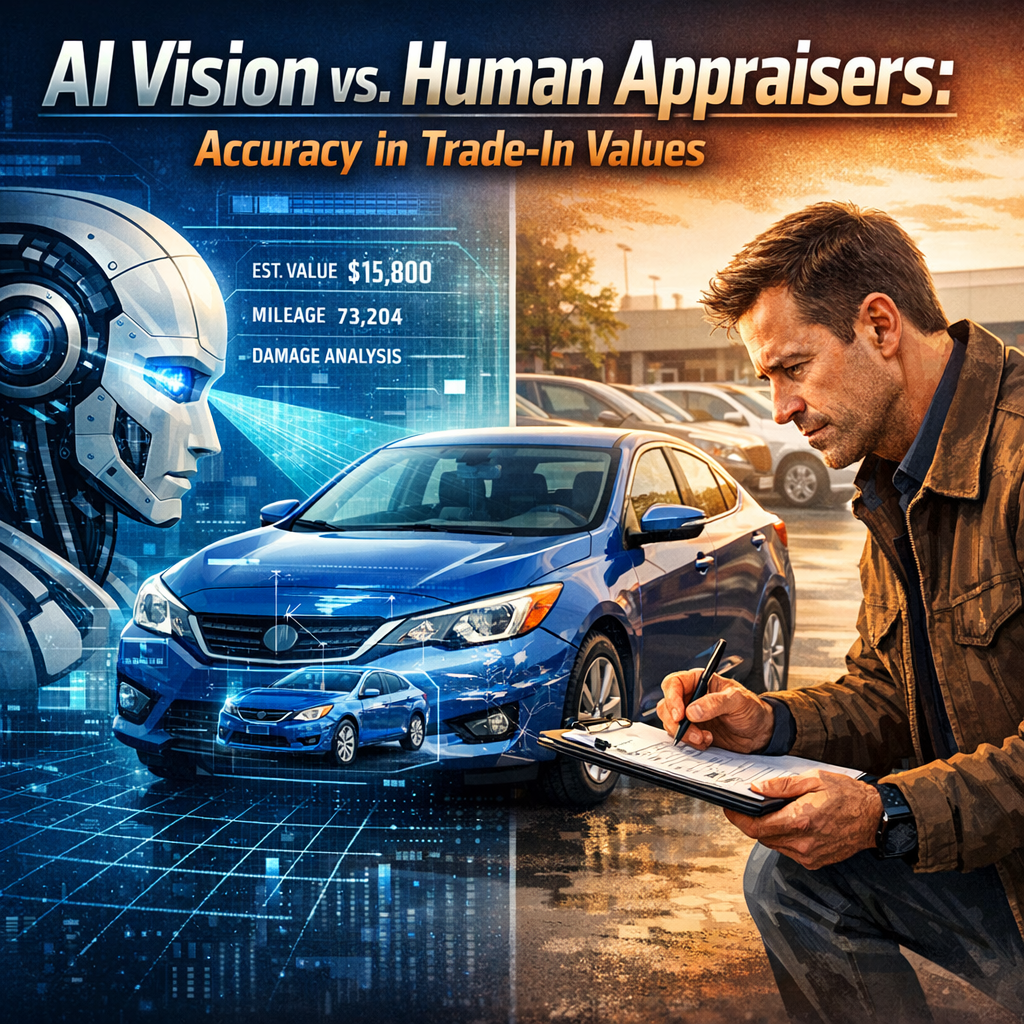
In the dynamic field of car sales, determining the most accurate trade-in value for used vehicles is critically important. Traditionally, human appraisers have been responsible for assessing the value of a trade-in car, relying on their expertise and personal judgement. However, the advent of technology, particularly AI Vision, is revolutionizing this process. But the question remains: which method—AI vision or human appraisal—provides more accurate trade-in values?

Understanding AI Vision in Car Appraisals


AI Vision refers to the use of computer vision technology and machine learning algorithms to inspect and analyze vehicles. This technology captures detailed images of a car and uses AI to assess its condition, including detecting dents, scratches, and other imperfections that might not be immediately visible to the human eye.

How AI Vision Works

1. Image Capture: High-resolution cameras capture multiple images of the vehicle from various angles.
2. Analysis: AI algorithms analyze the images to identify defects and assess overall condition.
3. Value Estimation: Based on the analysis, the AI system estimates the vehicle’s value.

The Role of Human Appraisers


Human appraisers bring years of experience and a nuanced understanding of car valuation to the table. Their assessment includes not only the physical condition of the car but also intangible factors such as market demand and the vehicle’s desirability among buyers.

Human Appraisal Process

- Visual Inspection: Appraisers conduct a thorough visual check for any cosmetic or structural damages.
- Test Drive: To evaluate the mechanical condition.
- Market Analysis: Analyzing current market trends to estimate the car’s value.

Comparison of AI Vision and Human Appraisers


Accuracy and Consistency

- AI Vision: Offers high consistency as it eliminates human error and bias. Its precision in detecting minute damages ensures a detailed and accurate assessment.
- Human Appraisers: While experienced, humans can be subjective and their evaluations may vary between appraisers or even on different days.

Speed and Efficiency

- AI Vision: Evaluates a vehicle in a matter of minutes, significantly speeding up the appraisal process.
- Human Appraisers: The process can be time-consuming, often taking anywhere from 30 minutes to several hours.

Scalability

- AI Vision: Easily scalable as it can assess multiple vehicles simultaneously without additional costs.
- Human Appraisers: Scaling up requires more personnel and increases costs.

Cost

- AI Vision: Once implemented, operational costs are relatively low.
- Human Appraisers: Higher long-term costs due to salaries and training expenses.

Which Is Better for Trade-In Values?


Determining which is more effective depends on the specific needs of the dealership or auction house. AI Vision offers a fast, consistent, and often more detailed examination of the vehicle, which can be particularly useful in high-volume environments. However, human appraisers understand the nuances of market dynamics and customer preferences, which are also crucial elements in car pricing.

The Optimal Solution: A Hybrid Approach


Perhaps the best approach is not choosing one over the other but integrating both methods to leverage their strengths. AI can handle initial inspections and provide a baseline value, while human appraisers can oversee the AI’s assessments and use their insights to adjust the final trade-in value accurately. This hybrid model ensures speed and efficiency while maintaining the quality of the appraisal process.

In conclusion, while AI Vision brings impressive technological advancements to vehicle appraisals, the expertise of human appraisers remains invaluable. Employing both methods in conjunction could yield the most accurate and fair trade-in values, accommodating both technological precision and human judgment.