
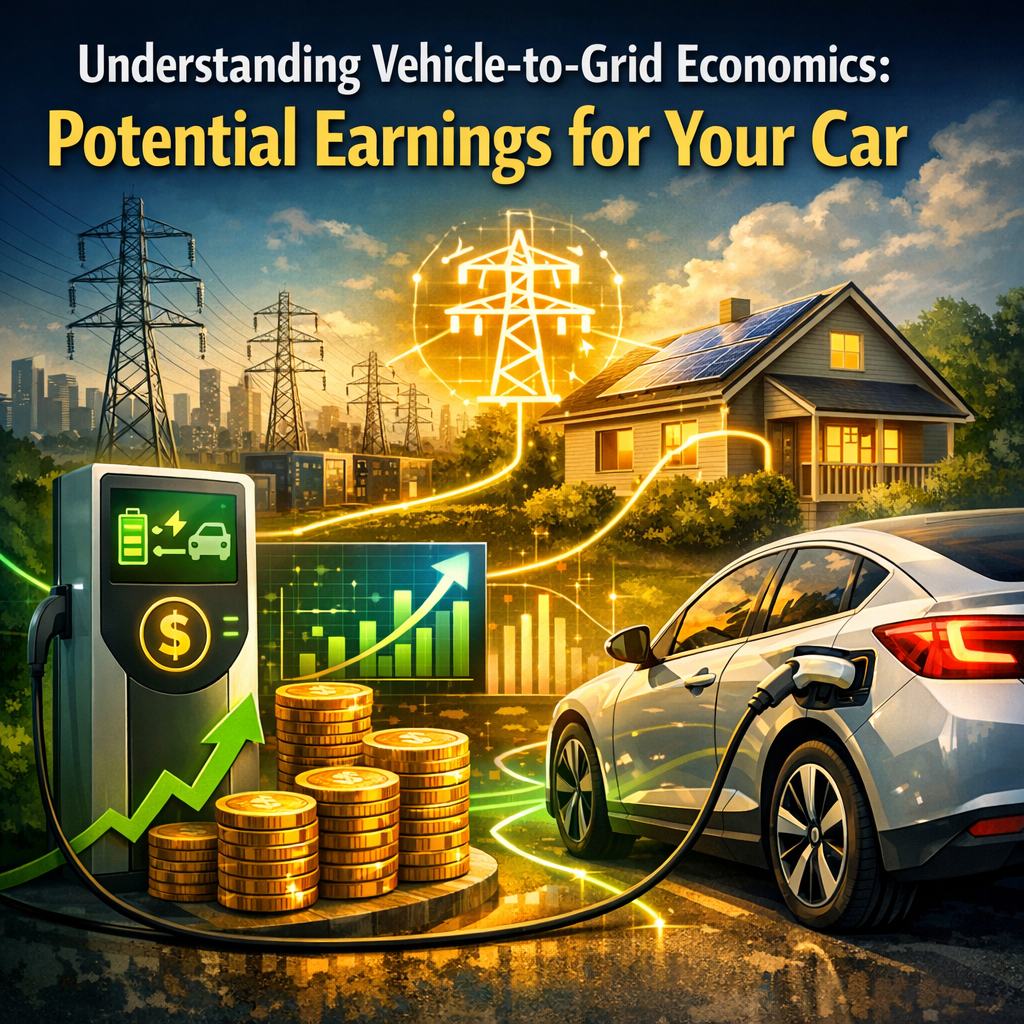
Understanding Vehicle-to-Grid Economics: Potential Earnings for Your Car
The Economics of Vehicle-to-Grid: How Much Can Your Car Really Earn?
In the quest for sustainable energy solutions, Vehicle-to-Grid (V2G) technology emerges as a fascinating innovation. V2G allows electric vehicles (EVs) not only to charge using the grid but also to feed electricity back into the grid when needed. This concept not only helps balance power supply and demand but also opens up potential earnings for EV owners. But how much can your car actually earn with V2G? Let’s delve into the economics behind this technology.
Understanding Vehicle-to-Grid (V2G) Technology
What is V2G?
V2G technology integrates electric vehicles into the electricity network. When an EV is connected to the grid, the batteries serve as storage units for excess energy produced during low demand periods. This energy can then be sold back to the grid during peak hours at a higher price.

How Does V2G Work?
- Connect: An EV owner connects their vehicle to a V2G-compatible charging station.
- Store or Charge: The vehicle either charges its battery or stores energy.
- Discharge: During peak electricity demand, the vehicle can discharge stored energy back to the grid.
Economic Benefits of V2G
V2G technology presents several economic benefits for various stakeholders, from vehicle owners to utility companies and even society at large.
For EV Owners
The primary benefit for EV owners is the potential to generate income through the sale of excess energy. However, the actual earnings can vary based on several factors such as electricity rates, battery capacity, and the number of hours connected to the grid.
For Utility Companies
Utility companies can reduce their costs related to energy production during peak periods. Moreover, V2G can help stabilize the grid, especially with the intermittent nature of renewable energy sources like solar and wind.
For Society
By optimizing energy usage and reducing the need for additional power plants, V2G contributes to lower emissions and a smaller environmental footprint, promoting a more sustainable energy ecosystem.
Potential Earnings: A Closer Look
The potential earnings from V2G can be attractive, but they depend heavily on various dynamic factors:
- Electricity Prices: Higher electricity prices during peak times mean more income when you sell back energy.
- Battery Capacity: Vehicles with larger battery capacities can store and sell more energy.
- Time Connected to Grid: More hours connected increases the opportunity to sell energy.
Case Studies and Real-World Examples
In places like California, where electricity prices peak sharply during certain hours, EV owners can earn upwards from a few dollars to tens of dollars per day, depending on the factors mentioned earlier. Studies and pilots conducted in regions with high penetration of renewables have shown that with optimal conditions, annual earnings for EV owners from V2G can range from $500 to $2,000.
Challenges and Considerations
Battery Wear and Tear
One significant concern with V2G is the potential accelerated wear and tear on EV batteries due to frequent charging and discharging cycles. This could lead to decreased battery life and potential replacement costs, which need to be factored into the economic calculations.
Infrastructure Needs
Effective V2G implementation requires substantial initial investments in compatible charging infrastructure and grid upgrades to handle back-and-forth energy flows, which could be a barrier to widespread adoption.
Wrapping Up
Vehicle-to-Grid technology not only supports a sustainable future but also offers economic opportunities for EV owners. While the potential to earn extra income from your car is an exciting prospect, it’s essential to consider all factors, including battery health and infrastructure needs. As technology advances and more utilities and governments support V2G initiatives, the economic benefits are likely to become more significant, potentially transforming how we think about our vehicles — not just as transportation but as active energy participants.