
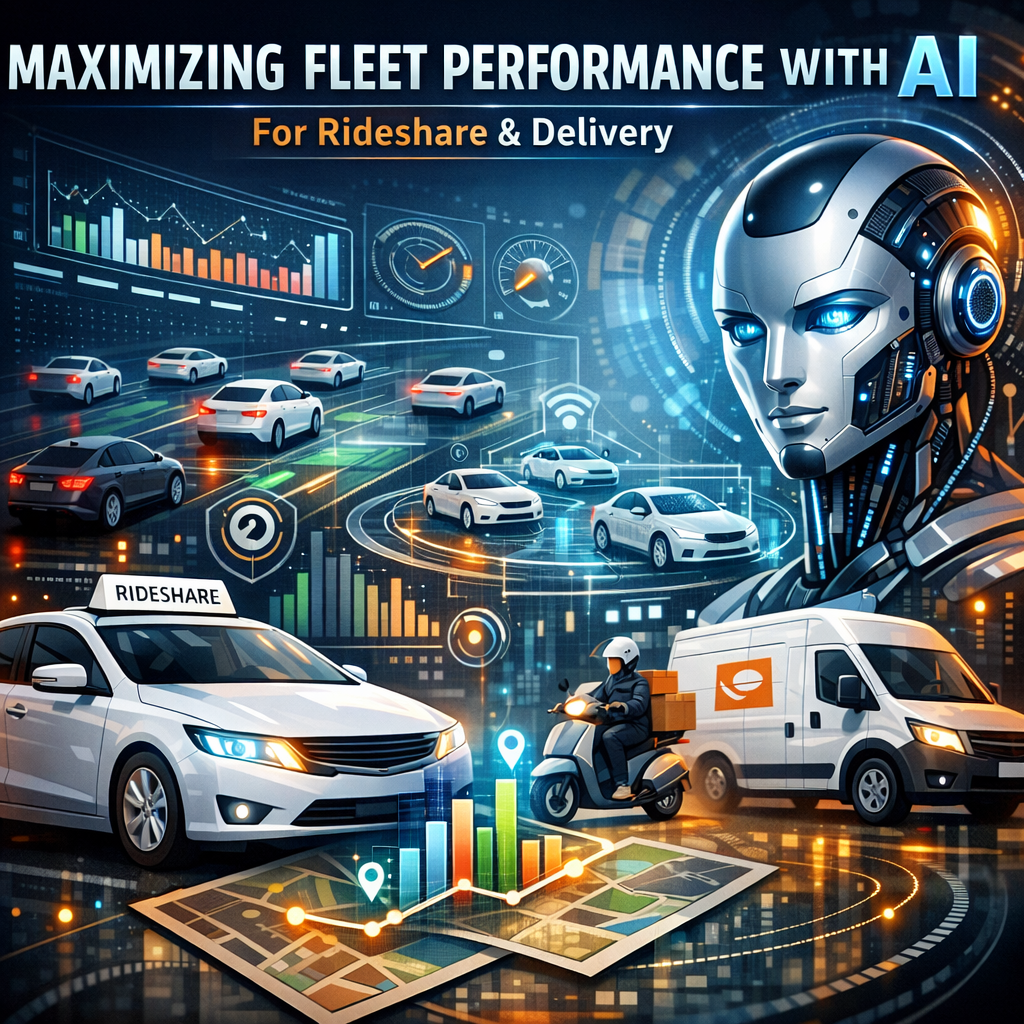
Maximizing Fleet Performance with AI for Rideshare and Delivery
title: “How AI Maximizes Fleet Performance for Rideshare, Delivery, and Corporate Vehicles”
date: 2023-12-15
author: Content Expert
How AI Maximizes Fleet Performance for Rideshare, Delivery, and Corporate Vehicles
In the rapidly evolving sectors of rideshare, delivery, and corporate vehicle management, artificial intelligence (AI) is playing a pivotal role in reshaping fleet operations. The integration of AI technologies has not only enhanced efficiency but also improved the profitability and sustainability of fleet operations. This blog explores the various ways through which AI is elevating the performance of these fleets.
AI-Driven Route Optimization
Efficient Path Finding
For any fleet, whether it’s for delivering parcels or ferrying passengers, route optimization is critical. AI algorithms analyze vast amounts of data, including real-time traffic updates, weather conditions, and roadwork information to suggest the most efficient routes. This minimizes delays and reduces fuel consumption, significantly cutting down costs and increasing on-time deliveries or pickups.

Predictive Analytics for Planning
AI’s predictive capabilities allow for advanced planning by forecasting demands based on historical data, seasonal trends, and current market analysis. This proactive approach helps in deploying the right number of vehicles at the right time, enhancing service reliability and customer satisfaction.
Enhanced Driver Performance and Safety
Real-Time Assistance
AI tools can provide drivers with real-time alerts about their driving patterns, suggest fuel-efficient driving techniques, and warn them about potential hazards. This not only helps in reducing the risk of accidents but also aids in maintaining the vehicle’s health by advising on optimal driving practices.
Monitoring and Training
Using AI to monitor driving behaviors helps identify areas where drivers may require additional training. Corrective feedback and tailored coaching sessions based on AI-generated insights can greatly improve safe driving practices and overall driver performance.
Predictive Maintenance
Avoiding Downtime
AI maximizes fleet availability by predicting potential vehicle failures before they occur. By analyzing data from vehicle sensors and maintenance logs, AI can forecast when a vehicle or component is likely to fail and schedule preemptive maintenance. This proactive approach prevents costly repairs, reduces downtime, and extends the lifespan of the fleet.
Inventory Management
AI not only predicts when parts need to be replaced but also optimizes the inventory levels of spare parts. This ensures that parts are available when needed without overstocking, thus optimizing storage costs and space.
Optimizing Fleet Acquisition and Management
Data-Driven Fleet Decisions
AI helps fleet managers make informed decisions on which vehicles to purchase based on a variety of factors including performance metrics, maintenance costs, and overall suitability for specific tasks or routes. These data-driven decisions ensure that the fleet is well-equipped to meet current and future demands efficiently.
Lifecycle Management
Through the analysis of vehicle usage patterns and maintenance history, AI aids in determining the optimal time for vehicle replacement. This ensures that the fleet remains modern, efficient, and capable of meeting the service standards demanded by customers.
Sustainability Initiatives
Reducing Carbon Footprint
AI’s route optimization and driving pattern analysis help in significantly reducing idle times and unnecessary fuel consumption. This contributes to lowering the fleet’s carbon footprint, aligning with global sustainability goals.
Electric Vehicle (EV) Integration
AI also plays a crucial role in integrating electric vehicles into fleets. It helps in managing the unique demands of EVs, such as charge planning and battery health monitoring, making the transition smoother and more efficient.
Conclusion
The integration of AI into fleet management for rideshare, delivery, and corporate vehicles offers compelling advantages. From enhancing route efficiency and predicting maintenance needs to optimizing fleet operations and promoting sustainability, AI is indispensable in modern fleet management strategies. As technology evolves, we can anticipate even deeper integration of AI, pushing the boundaries of what fleet operations can achieve in efficiency, safety, and environmental responsibility. Embracing AI is not just a strategic move for competitive advantage but a necessary evolution in the face of modern logistical challenges.